Why Your AI Strategy Needs Orchestration, Not More Tools
Posted by: Emily Johnson | January 15,2026

The difference between organizations drowning in AI experiments and those achieving measurable ROI isn't budget or talent. It's coordination.
The executive dashboard shows seven AI initiatives in flight. The board is asking about AI ROI. Your teams are enthusiastic but pulling in different directions. Sound familiar?
Here's the uncomfortable truth most AI vendors won't tell you: adding another AI tool to your stack isn't the answer. In fact, it might be making things worse.
The Fragmentation Problem No One Talks About
Walk into any enterprise IT department today and you'll find a familiar pattern: LangChain for language model integration, n8n or Zapier for workflow automation, custom Python scripts for data processing, separate vector databases for each use case, and a growing list of point solutions that each solve one problem brilliantly while creating three new integration headaches.
The math tells the story. Organizations running 5-10 disconnected AI tools report spending 35-40% of their AI team's time on integration work rather than innovation. That's not a rounding error. That's nearly half your AI investment going to digital plumbing instead of business outcomes.
But here's what makes this truly costly: fragmentation doesn't just waste engineering hours. It prevents the kind of sophisticated, coordinated AI behavior that delivers transformational results.

What Orchestration Actually Means
Orchestration isn't a buzzword. It's an architectural principle borrowed from music, where an orchestrator takes individual instruments and arranges them into something greater than the sum of their parts.
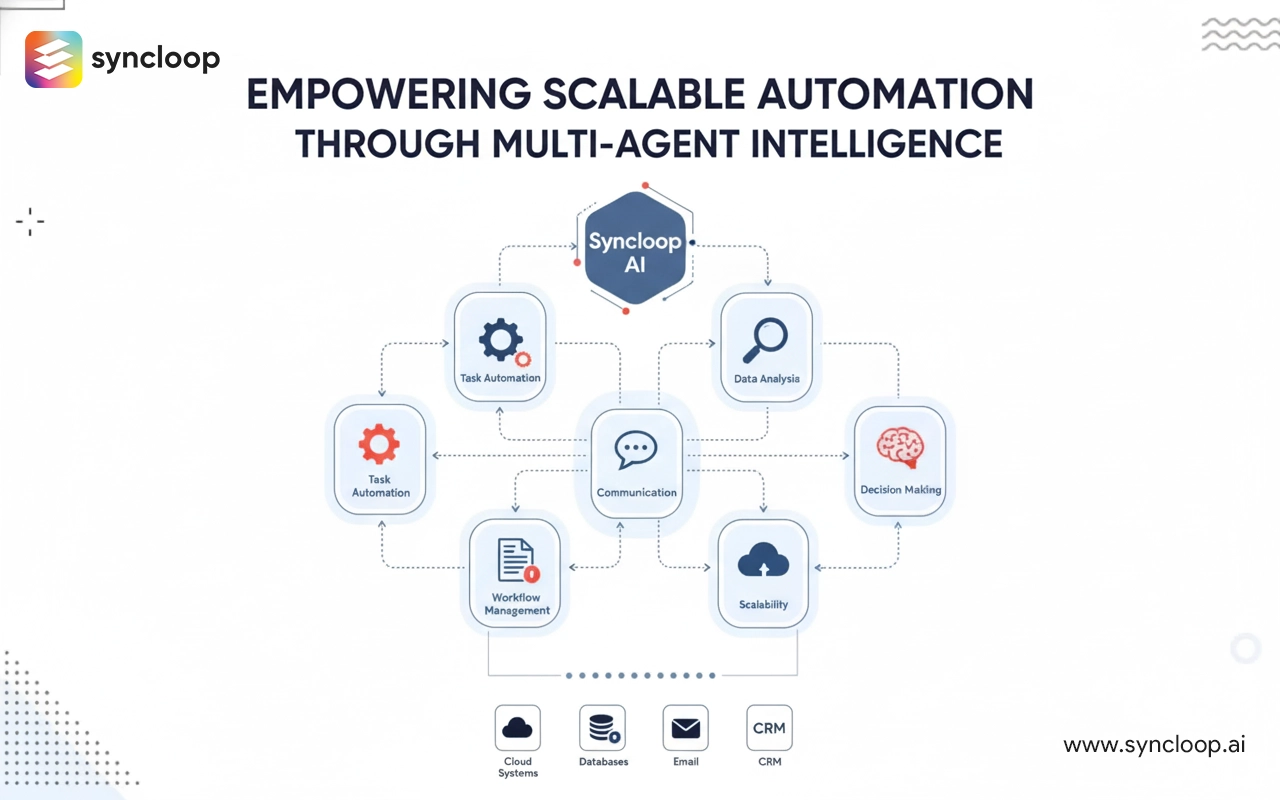
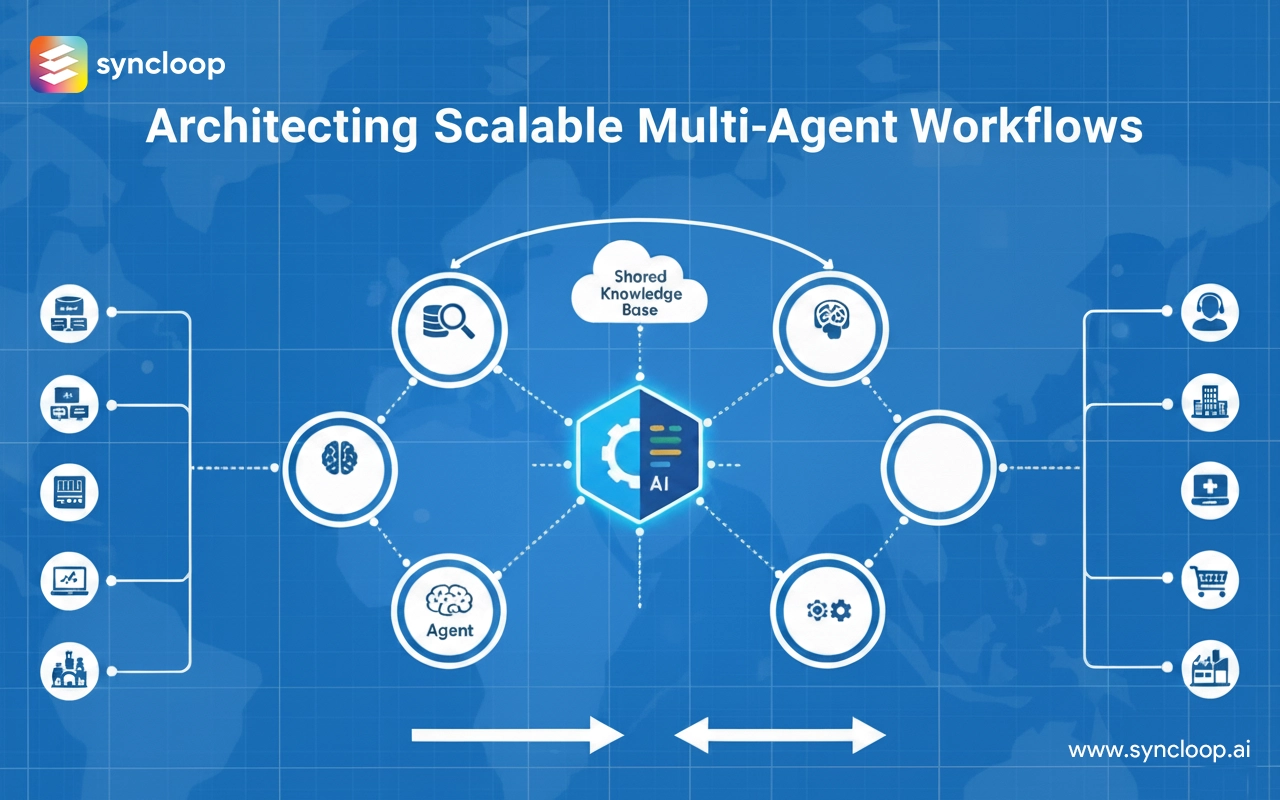
In AI terms, orchestration means creating a unified environment where multiple AI agents can collaborate on complex tasks, share context and memory across interactions, hand off work to humans when judgment is required, connect to existing business systems without custom integration code, and scale from proof-of-concept to production without architectural rewrites.
The key insight: individual AI tools are like individual musicians. Talented, capable, but limited in what they can accomplish alone. Orchestration is what turns a collection of soloists into a symphony.
The Business Case for Unified AI Operations
Consider a typical cross-functional process: customer onboarding. In a fragmented AI environment, you might have a chatbot handling initial inquiries, a document processing system extracting data from submitted forms, a risk assessment model running in a separate environment, and human reviewers coordinating everything through email and spreadsheets.
Each handoff introduces delay. Each system boundary creates potential for errors. Each integration point requires maintenance. The customer waits. The team scrambles. The CFO asks why AI hasn't delivered the promised efficiency gains.
Now imagine the same process with orchestration: a coordinated team of AI agents that share context, route decisions intelligently, loop in human experts only when genuinely needed, and present a unified experience to both customers and internal teams. The process that took 72 hours now takes 4. The manual coordination overhead drops to near zero. The board finally sees ROI.

Signs Your AI Strategy Needs an Orchestration Rethink
Not every organization is ready for orchestrated AI. But certain patterns suggest you've outgrown the point-solution approach:
- Integration has become a full-time job. If you have engineers whose primary function is connecting AI tools to each other and to existing systems, you're paying for coordination overhead that orchestration eliminates.
- Scaling requires starting over.Your proof-of-concept worked beautifully. Now production requires a complete rebuild. This is a classic sign of fragmented architecture.
- AI decisions are black boxes Compliance is asking how the system reached a particular conclusion. You can't answer because the logic is spread across five different tools with no unified visibility.
- Your AI roadmap is really a tools roadmap. Strategic planning discussions focus on which vendor to buy next rather than which business outcomes to achieve.
The Orchestration Maturity Curve
Organizations typically progress through three stages of AI sophistication:
- Stage 1: Tool Accumulation. Departments adopt AI point solutions independently. Integration is ad-hoc. Value is localized to individual use cases.
- Stage 2: Platform Consolidation. IT recognizes the fragmentation problem and attempts to standardize on fewer platforms. Integration improves but remains manual.
- Stage 3: True Orchestration. AI agents, human workers, and business systems operate as a coordinated whole. Integration is automatic. Value compounds across the organization.
Most enterprises are stuck between stages 1 and 2. The competitive advantage lies in reaching stage 3.
What to Look For in an Orchestration Approach
If your organization is ready to move beyond fragmented AI, evaluate orchestration solutions against these criteria: Does it enable multi-agent collaboration where AI systems work together rather than in isolation? Does it provide visual transparency so non-technical stakeholders can understand and contribute? Does it protect against vendor lock-in through open licensing and portable architecture? Does it scale from experimentation to production without requiring architectural rewrites?
The organizations winning with AI aren't the ones with the most tools. They're the ones where tools, agents, and humans work together as one coordinated team.
That's the orchestration advantage. And it's available to any organization willing to think differently about their AI strategy.
Back to Blogs